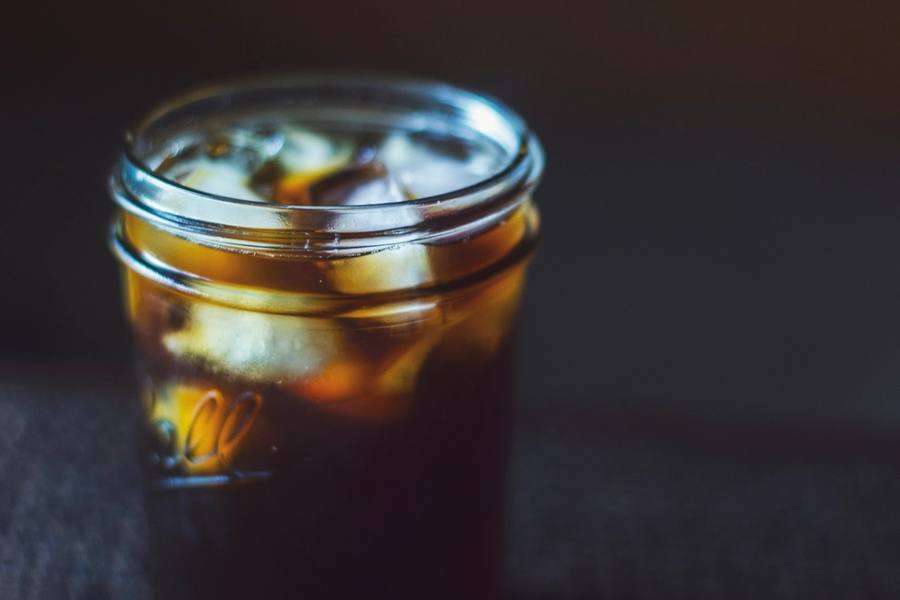
County Line Kitchen Cold Brew Mason Jar
Temsili görsel (stok fotoğraf); ürünün kendisi değildir.
The Jar Method, Formalised
The most common way people make cold brew at home is a jar, and this is that with the straining solved: a wide-mouth mason jar, a laser-cut stainless filter tube, and a lid with a handle.
Grounds go in the filter, water fills the jar, and after twelve to twenty-four hours you lift the tube out. No paper, no felt, no valve, nothing to replace.
Glass And Steel
A mason jar is a mason jar — thick, cheap, dishwasher safe and replaceable anywhere. The filter is the part worth paying for, and the laser-cut perforations are finer and more even than the woven mesh many competitors use.
Because it is glass and steel with no plastic in the brew path, there is nothing to stain, retain odours or perish.
Because the vessel is a standard wide-mouth mason jar, replacements and spares are available anywhere that sells preserving supplies. If the glass breaks the filter is unaffected, and vice versa — a genuine advantage over systems where a cracked proprietary carafe means the whole brewer is out of service until a part arrives.
What It Brews
A clean concentrate with mesh-level body — more sediment than a paper-filtered OXO brew, less than a French-press-and-strain approach. Perfectly good, and the finer perforations genuinely help against cheaper mesh tubes.
Because it is a sealed jar, the concentrate can simply be capped and refrigerated in the vessel it brewed in, which is tidier than systems needing a separate decanter.
The filter tube sits centrally and the grounds are confined inside it, which is a meaningful difference from jar methods that let grounds float free. It keeps the brew tidy, but it also means the water has to move through a narrower column, and stirring once after filling does noticeably more for extraction here than in an open-immersion jar.
Against The Alternatives
Against the OXO, this gives up even water distribution and a drain valve and costs far less. In the cup, the difference is smaller than the price gap.
Against a plain jar and a sieve, it removes the straining step and improves the filtration. That is a modest but real upgrade for very little money.
There is a quiet durability advantage in using a standard jar that only shows up over years. Mason jars are designed for preserving, which means they tolerate thermal shock, dishwashers and being dropped into a full sink far better than the thin borosilicate carafes supplied with purpose-built brewers. Combined with a filter tube that has nothing to wear out, this is plausibly the longest-lived brewer of the group despite being the cheapest.
Who Should Not Buy It
Anyone who wants no sediment at all should use a paper-filtering system. A steel filter of any quality will pass fines.
Anyone brewing large volumes regularly will find the jar sizes limiting compared with a dedicated system.
Compared with the OXO, the omission that actually matters day to day is not the rainmaker lid but the valve. Lifting a full filter tube out of a jar drips, and there is no way to avoid it entirely — a bowl to receive the tube is worth having ready rather than improvising over the sink.
The Verdict
The sensible budget answer. It makes genuinely good cold brew concentrate, brews and stores in one vessel, and there is nothing to wear out or replace.
It will not match a paper-filtered brew for clarity, and it does nothing clever about wetting the grounds. At the price, neither complaint carries much weight.
Bir bakışta
Artılar
- Very inexpensive with nothing to replace
- Laser-cut filter is finer than typical woven mesh
- Brews and stores in the same sealed jar
- Glass and steel only — nothing to stain or perish
Eksiler
- Mesh filtration passes some fines
- No rainmaker lid; grounds wet unevenly if not stirred
- Jar capacity limits batch size
- Filter tube needs a brush to clean properly
Sıkça sorulan sorular
Do I need to stir it?
A stir after filling helps, since there is no rainmaker lid to wet the bed evenly. Without it the top of the grounds can stay dry and the brew under-extracts.
How do I clean the filter tube?
A bottle brush under a hot tap. Grounds lodge in the perforations and a rinse alone leaves them; the dishwasher handles it reasonably well too.
Can I use paper as well?
Some owners line the tube or pour the finished concentrate through a paper filter afterwards for clarity. It works, at the cost of the simplicity you bought the jar for.
Teknik Özellikler
| Method | Immersion, 12–24 hours |
| Vessel | Wide-mouth mason jar |
| Filter | Laser-cut stainless tube |
| Materials | Glass and stainless only |
| Output | Concentrate, to be diluted |
| Storage | Seal and refrigerate in the jar |
| Consumables | None |
| Dishwasher safe | Yes |
Özet
The budget answer that actually works: good concentrate, no consumables, brews and stores in one jar. Accept a little sediment and there is little to criticise.
Amazon'da Fiyatı Kontrol Et