Gaggia Classic Evo Pro
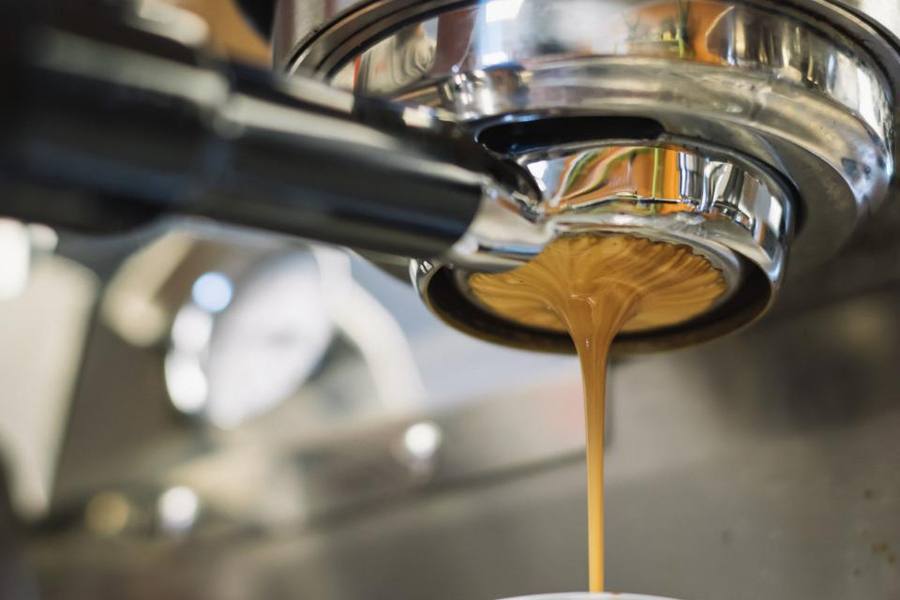
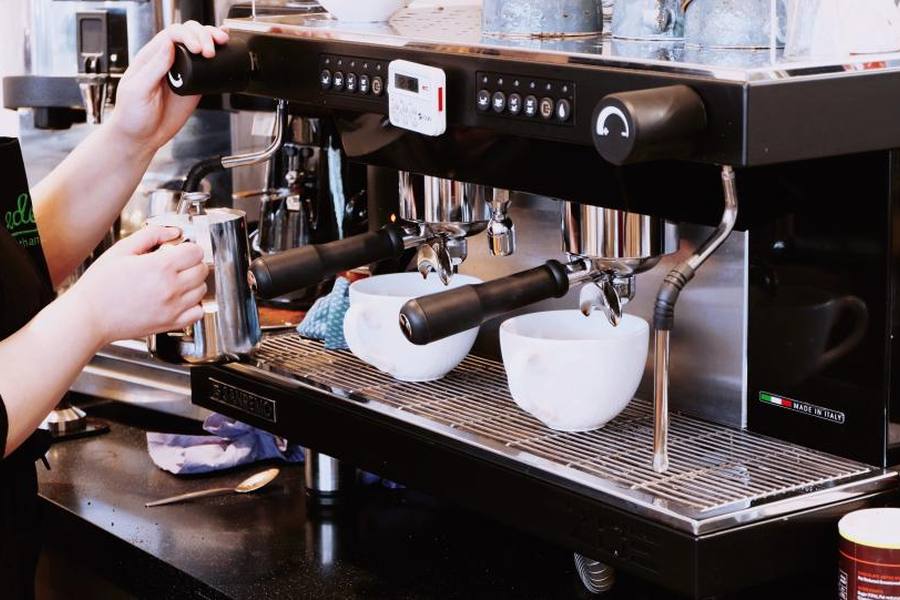
Image illustrative (photo de stock) ; ce n'est pas le produit exact.
Commercial Parts In A Domestic Body
The Gaggia Classic has been in production in various forms for decades, and its appeal has always been the same: a 58mm portafilter and a solid brass brew group, the same dimensions and materials as commercial machines, in a domestic package.
The Evo Pro revision returned the brass group after earlier models used aluminium, and that matters for thermal stability and for the machine's long-term serviceability. Brass holds heat and does not corrode the way aluminium can.
The practical consequence of 58mm is the accessory ecosystem. Every bottomless portafilter, precision basket, distribution tool and tamper made for commercial machines fits, which is a genuinely different world from Breville's 54mm.
What It Asks Of You
This is not a convenience machine. There is no automatic steaming, no pressure gauge as standard, no pre-infusion, and temperature is controlled by a simple thermostat that cycles around the target rather than holding it precisely.
The result is that technique matters. Temperature surfing — timing the shot relative to the heating cycle — is a real skill Classic owners learn, and a shot pulled without regard to it will be inconsistent.
The machine rewards attention and punishes inattention, which is exactly why it has the following it does and exactly why it frustrates people who wanted a button.
Built To Be Modified
The Classic is probably the most modified espresso machine in domestic use. PID temperature controllers, OPV pressure adjustments, steam wand replacements and pre-infusion kits are all common, well documented and reversible.
That modding culture exists because the machine is simple, its parts are standard and its internals are accessible with ordinary tools. A twenty-year-old Classic can be brought to modern performance for a modest outlay.
It also means the stock machine is not the ceiling. Buyers should understand that a large part of the enthusiasm around it assumes at least a PID at some point.
Against The Alternatives
Against the Bambino Plus, the Gaggia is slower to heat, harder to use and far more capable in the long run. One is an appliance; the other is a platform.
Against the Barista Express, the Gaggia has no grinder and no gauge, and a better group, better parts availability and a vastly larger accessory ecosystem.
The OPV — the over-pressure valve — deserves a mention because adjusting it is the cheapest worthwhile modification on the machine. From the factory the Classic is set well above the nine bars espresso actually wants, and dropping it produces noticeably sweeter, less harsh shots. It requires opening the case and turning a screw, it costs nothing, and it is completely reversible. That such a meaningful improvement is free is a fair summary of why this machine has the following it does.
Who Should Not Buy It
Anyone wanting to press a button and get a latte should not buy this. The steam wand is manual, the thermostat is crude and nothing is automated.
Anyone unwilling to buy a decent grinder is wasting the machine entirely. A 58mm single-wall basket is unforgiving, and a poor grind produces a poor shot regardless of the brass group.
The Verdict
The enthusiast's entry machine: commercial dimensions, a brass group, endless accessories and a documented upgrade path that keeps it relevant for decades.
It demands technique, a proper grinder and probably a PID eventually. Accept that and it is one of the best-value routes into serious home espresso.
En un coup d'œil
Avantages
- 58mm commercial portafilter opens a huge accessory ecosystem
- Solid brass brew group holds heat and lasts
- Simple, serviceable internals with excellent parts availability
- Extensive, well-documented modification path
Inconvénients
- Thermostat cycles rather than holding temperature precisely
- No pressure gauge or pre-infusion as standard
- Manual steam wand with a real learning curve
- Requires a capable grinder to be worth owning
Questions fréquemment posées
Do I need to add a PID?
Not to make good espresso, but it removes the need to temperature surf and makes shots far more repeatable. Most long-term owners fit one eventually, and the fact that you can is a large part of the machine's appeal.
What is temperature surfing?
Timing your shot relative to the thermostat's heating cycle so the water is at the right temperature when it hits the coffee. It sounds arcane and becomes second nature, but it is genuinely necessary on a stock machine.
Is the steam wand any good?
The stock wand is adequate and many owners replace it with a commercial-style tip for better microfoam. It is a cheap, reversible modification and one of the first most people make.
Spécifications
| Portafilter | 58 mm commercial standard |
| Brew group | Solid brass |
| Boiler | Single |
| Temperature control | Thermostat (PID commonly added) |
| Steam wand | Manual |
| Pre-infusion | No, stock |
| Serviceability | High; standard parts |
| Built-in grinder | No |
Résumé
Commercial dimensions and a brass group in a domestic machine, with a modification path that keeps it current for decades. Demands technique and a real grinder.
Vérifier le prix sur Amazon