Fellow Atmos Vacuum Coffee Canister
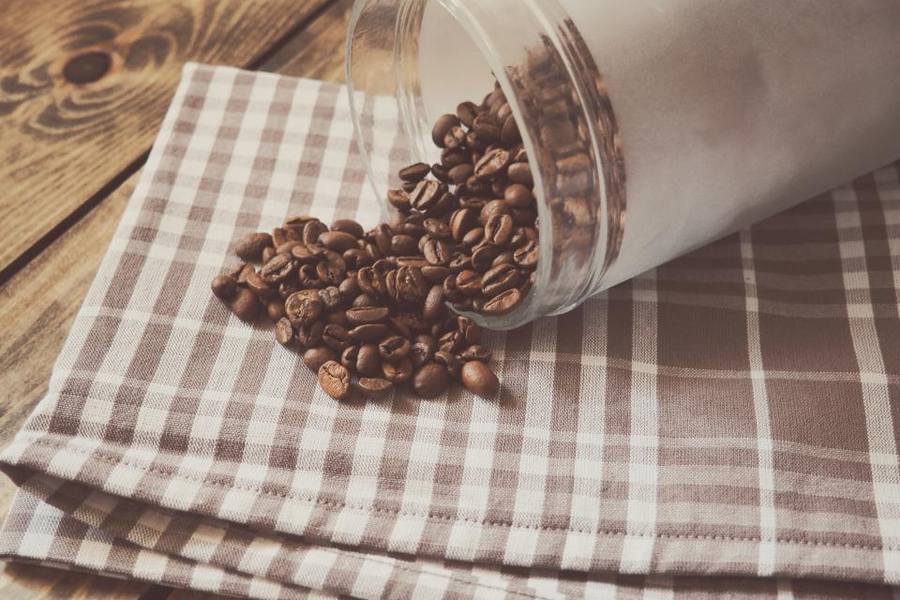
Representative image (stock photo); not the exact product.
Staling Is Oxidation
Coffee goes stale mainly because oxygen reacts with the oils, and secondarily because volatile aromatics escape. An airtight jar addresses the second problem and leaves the first: the air already inside keeps oxidising the beans.
The Atmos attacks the first. Twisting the lid drives a small pump that pulls air out of the canister, reducing the oxygen sitting against the coffee rather than simply trapping it.
It is a real mechanism rather than a marketing gesture, and the difference over a fortnight is noticeable with fresh beans — the aroma on opening stays brighter for longer.
Build And The Vacuum It Holds
The canister is steel or glass with a plastic lid assembly containing the pump. It feels solid, and the twist action is satisfying in the way Fellow products generally are.
The vacuum is not permanent. It degrades over days, and the lid should be re-twisted periodically — most owners do it each time they open it, which is the practical routine. A canister left untouched for a fortnight will have lost much of its vacuum.
Practical Use
Capacity is the usual constraint: the commonly sold sizes hold roughly a standard bag of beans, so a large bag needs decanting or a second canister.
The glass version lets you see the level, which is genuinely useful, but exposes the beans to light — a secondary staling factor. The steel version solves that and hides the level. Neither is clearly better.
It cannot reverse staling. Beans that were already flat when they went in will still be flat, and a canister is not a substitute for buying fresh coffee in sensible quantities.
Bean size affects how well the vacuum holds, which surprises most owners. Whole beans leave large interstitial gaps that the pump empties readily; ground coffee packs densely and traps air between particles that no lid-mounted pump can reach. The canister therefore performs closer to its claims with beans than with grounds, which is another reason grinding to order remains the more effective step.
Against The Alternatives
Against a simple airtight jar, the Atmos removes air rather than trapping it, which is a meaningful difference over two or three weeks.
Against a valved bag folded and clipped, the canister is tidier and better, though buying smaller bags more often beats any storage solution.
Against the Airscape, which displaces air with a plunger rather than pumping it out, the Atmos is the more refined object and the less robust mechanism. A pump has moving parts, a gauge that can drift and a seal that will eventually tire; a plunger has one valve. Which matters more depends on whether you value the feedback of a gauge or the certainty of something that cannot lose its seal over a fortnight.
Who Should Not Buy It
Anyone who finishes a bag within a week should not bother. Coffee that fresh has not had time to stale meaningfully and the canister solves nothing.
Anyone who buys large sacks of beans will find the capacity frustrating and should look at larger sealed containers instead.
The Verdict
A genuinely functional storage solution rather than a decorative one, and the vacuum mechanism does what it claims.
It does not hold vacuum indefinitely, it does not revive stale coffee, and it is unnecessary if you buy small and drink fast.
At a glance
Pros
- Actively removes air rather than merely sealing it
- Noticeable aroma retention over two to three weeks
- Well built with a satisfying, simple mechanism
- Available in opaque steel to exclude light
Cons
- Vacuum degrades over days and needs re-pumping
- Capacity suits a standard bag, not bulk buying
- Glass version admits light, a secondary staling factor
- Pointless if you finish a bag within a week
Frequently asked questions
How long does the vacuum last?
Days rather than weeks — the gauge drifts back gradually. The practical routine is to re-twist the lid every time you take beans out, which takes a couple of seconds.
Steel or glass?
Steel excludes light, which is a genuine if secondary factor in staling. Glass lets you see how much is left. If the canister lives in a dark cupboard, glass is fine; on a sunny worktop, choose steel.
Will it keep ground coffee fresh?
It slows the process, but ground coffee stales far faster than beans because of the surface area, and no canister meaningfully changes that. Grinding to order remains the only real answer.
Specifications
| Mechanism | Twist-action vacuum pump in lid |
| Materials | Steel or glass body, plastic lid |
| Capacity | Approx. one standard bag of beans |
| Vacuum duration | Days; re-pump periodically |
| Light exclusion | Steel yes, glass no |
| Indicator | Vacuum gauge on lid |
| Dishwasher safe | Body only; lid hand wash |
| Reverses staling | No |
The bottom line
Storage that actually removes air rather than trapping it, and it works. Unnecessary if you buy small bags and drink them quickly.
Check Price on Amazon